Chase Sequences
A History of Pursuits in Silent Hill
The fear of being chased has been a driving factor for many nightmares throughout history, so it’s no surprise this trope has found its home in the horror genre. Horror films have adopted chase sequences as a staple, including the obligatory moment where the character falls over at the worst possible moment as their pursuer closes in. This usually inspires a yell at the screen, or perhaps an eye-roll from the viewer - but in a medium where interactivity is necessary, video games have expanded their relationship with the chase sequence in ways film never could.
Chase sequences are at the core of many modern horror mods, with the modding scenes for Garry’s Mod and Roblox being two notable examples. From an indie development perspective, only having one enemy to deal with is wonderful for minimising scope, and so the explosion of creepypasta PNGs endlessly chasing you through the backrooms was perhaps inevitable. Of course, chase sequences are also found in retro and AAA series such as Clock Tower, Evil Within and Resident Evil. These vary from serving as a key component of gameplay, to being a short intermission that breaks up the core gameplay loop. However, no series has explored the possibilities of chase sequences quite like Silent Hill. Within this franchise we’d see these segments evolve from simple mechanical interludes to an integral piece that would even, at times, replace combat.
While the earlier entries didn’t explore chase sequences as heavily as later instalments, the survival horror genre as a whole invites this type of gameplay due to its mechanical tendency to employ limited resources. Players often run past enemies in an attempt to conserve ammo and healing items, only reaching (what they hope to be) momentary safety once they enter the next room. The inability to fight back instils vulnerability and tension, so taking these organic moments and shaping them into something more curated feels like a natural progression for the series.
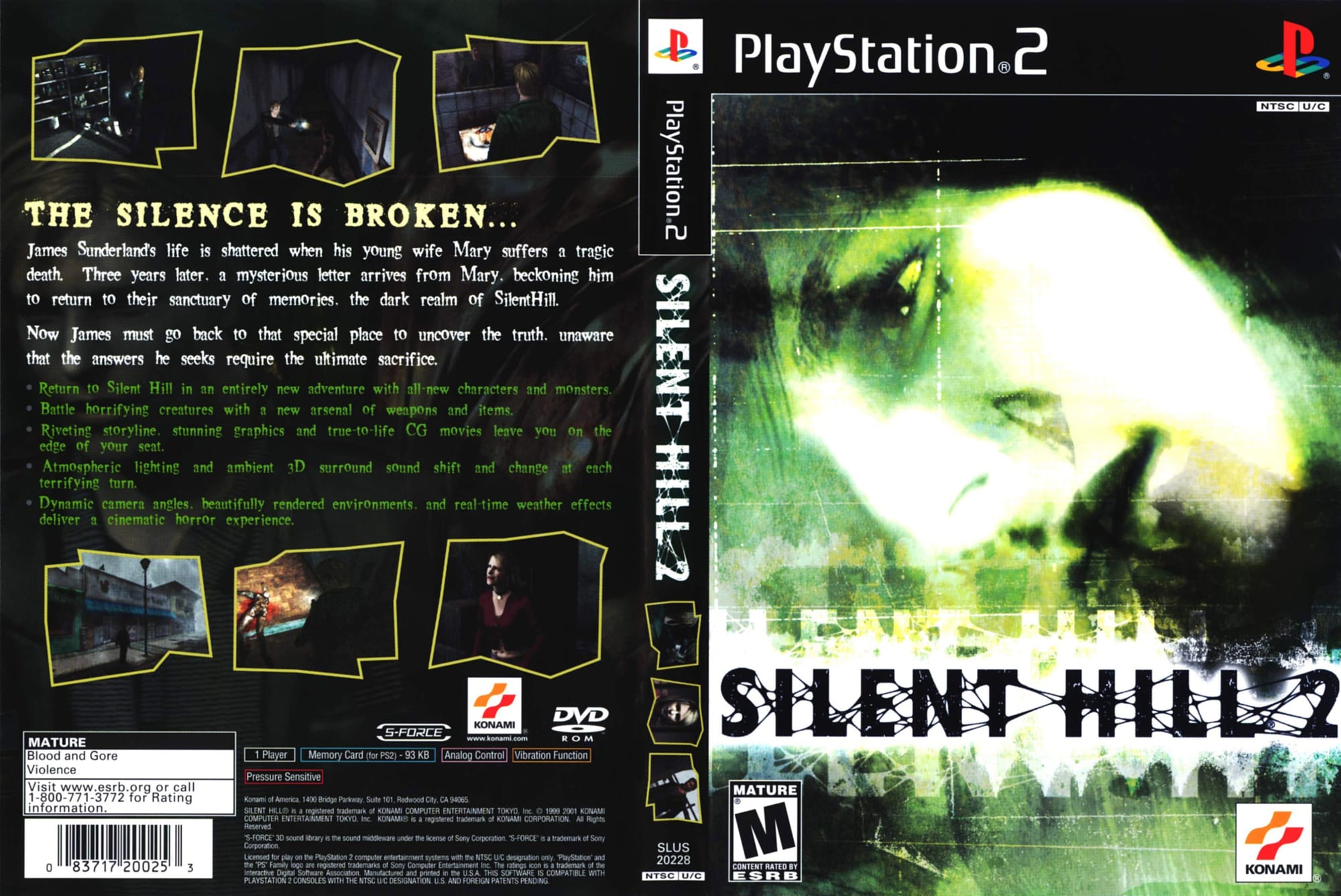
The earliest example of a chase sequence can be seen in Silent Hill 2, which features a short, traditional chase through Brookhaven Hospital with James and Maria being closely followed by Pyramid Head. You must run through a linear passage of corridors to reach an elevator - though on hard difficulty, you also have to turn around to shoot your opponent in order to slow it down and prevent Maria dying before you even get to the end of the section. It’s a rare case where you’re entrusted with another character to protect aside from yourself, and a slight submission of control in the sense that your companion’s AI will likely perform in ways that heighten your stress level. However, typical of this era of survival horror, the approach to camera perspective also naturally contributes to the high degree of tension. Much like the Borley Haunted Mansion segment of Silent Hill 3 where Heather is chased through hallways by a mysterious red light, the use of fixed camera angles prevents you from seeing far ahead, throwing unpredictable turns at you that must be quickly maneuvered to avoid your demise.

In contrast to Silent Hill 3, the Silent Hill 2 Remake has a modern camera scheme, meaning the sense of unpredictability provided by fixed cameras has to be compensated for with fallen obstacles to vault over, and Pyramid Head catching up to the player by breaking through walls. Aside from the primal fear of being hunted, it’s the element of surprise during the chase sequence that is the foundation of suspense, and this has been forced to change with decreasing technical limitations.
It wouldn’t be until Silent Hill: Shattered Memories, however, that the concept of chase sequences would evolve so much further - significantly influencing the titles that would follow. Originally made for the Wii and aimed at casual players, this reimagining of the first Silent Hill game would ditch combat and its corresponding violence entirely. This of course meant that the climax of its ‘horror’ gameplay would rely solely on the urgency created by being chased, bringing about a number of inventive additions to the otherwise basic formula. Before throwing you into several nightmare sequences spread throughout the playthrough, the area you’re in freezes over before your eyes, transporting you into the otherworld. The structure of these areas is much more complex than the linear A to B design seen in previous instalments, instead weaving multiple routes together in a labyrinthine tangle of pathways to disorientate the player. Navigating these environments is already a challenge in itself, so with the incorporation of hostile creatures relentlessly scrambling after the player, survival isn’t an easy task.

Still, there are tools available that can help you progress through these sections, including objects you can knock down and use as barricades, as well as flares you can pick up that will deter your attackers when lit. Other stealthier alternatives involve hiding under beds or inside lockers until the coast is clear, and keeping your flashlight switched off to refrain from alerting nearby enemies. It’s even possible to use a camera view to glance behind you while running, which allows you to see the creatures’ exact proximity to you - adding a level of anxiety from the knowledge they’re breathing down your neck and clawing at your heels. Refusing to use this function and fixating on your view ahead can be a comforting practice of blissful ignorance, although even without visuals, there is still malevolent sound design to let you know something is after you. It’s impossible to play without a raised heart rate due to the stressful, thumping music and violent screeches when a creature has got you in their sights, prompting you to think fast and keep on moving before they swarm you.


Shattered Memories, unlike other chase sequences in the series, doesn’t have just one entity heading straight for you. In contrast, it further emphasises your vulnerability by making you feel hopelessly outnumbered. It extends some forgiveness, as even when a creature or two latches onto you, you can shake them off by following the prompts shown on screen. You may get lucky with your route choice and reach the end of a level without much trouble, but if you’re finding yourself going around in circles, you can make use of your phone’s GPS to gauge which direction you haven’t been in yet and pinpoint the exit. In later nightmare sections, however, this function is limited - and you’ll instead be required to pay attention to your surroundings to choose the correct string of doors to progress through, otherwise you’ll be looped through the same hallways endlessly. The necessity of observing your environment more closely provides some variation in pacing for the chase sequence, and serves as a possible answer to traditional chase gameplay criticism that they do not allow players a moment to appreciate the environmental design and other details.
Silent Hill Downpour would take inspiration from Shattered Memories and continue to use these sections as a break between level exploration and puzzles, however, the game did still include combat and boss fights. For the most part, these sections are less labyrinthine than its predecessor and make it easier to stay on track, yet a single entity known as the Void ceaselessly whirls towards you. It appears somewhat similar to the red light in Silent Hill 3’s haunted mansion, but when close by, time slows down and damage is inflicted upon the player until they attempt to outrun the Void. Downpour focuses more on an obstacle course layout and relatively simple environmental puzzles performed under time pressure, such as violently spinning the analog stick to rotate a valve and open a gate. Much like its predecessor, this gives some attention to the controller’s functions, breaking the player’s mindset away from simple traversal and adding these unexpected events to induce panic. In a way, each game would try its hand at interpreting chases and the underlying emotions that come with it, even including the ill-fated P.T.

The P.T. demo experience takes place in a repeating domestic hallway much like the one used by Shattered Memories in a late game nightmare segment. Though at a much more “relaxed” pace, P.T. requires the player to trigger certain events by interacting with different parts of the environment to advance to the next loop, which then introduces subtle alterations. Too many mistakes, however, and the player is jumpscared by the disturbing antagonist Lisa, restarting the current loop. At certain points you can hear heavy breathing and witness Lisa’s silhouette being cast upon the wall, implying that she’s right behind you. This was generally assumed to have just been a trick of audio and shadow, but in 2019, content creator Lance McDonald shared an unsettling revelation discovered via a camera hack. It was found that the disturbing entity actually latches onto the player and their twitching model tails them as they move through the hallway. It’s a detail that the developers could have easily ignored, given it’s not normally visible, but it serves as a reminder that there’s nothing quite as unnerving as realising you weren’t actually as alone as you thought you were. Though lacking the high-octane and consistent climax of other chase sequences, P.T. is more of a prolonged chase simmering at the surface. In the same way there’s punishment for failing to pass obstacles or making wrong turns in Downpour and Shattered Memories, Lisa is waiting patiently for you to make a mistake, catching you in a sudden pounce. Either way, both chases have you holding your breath until you’ve reached safety… or the credits.
Even though the Silent Hill series wouldn’t return with another instalment until around a decade later, 2024’s The Short Message still kept the chase sequence alive in its core gameplay loop - arguably making up a greater ratio of its playtime than any of the games that came before it. Now with a first person perspective like P.T., this title would combine the mazelike approach to its chase sequences with the singular pursuer Sakura Head taking the main stage. The labyrinths you navigate grow in complexity each time, with the final chase tasking you with finding five photographs to unlock the door to escape. If caught by Sakura Head, you’re impaled by spiky limbs and sent back to the beginning of the sequence, without any of the forgiveness offered for errors in the same manner as Shattered Memories and Downpour.

Segments dedicated to fleeing an enemy (or a horde of them) have been a feature across the mainline entries of Silent Hill more often than not. From the more subtle applications like P.T. to the full-blown, imaginative exploration that Shattered Memories employed, we’d see unexpected mechanics like environmental puzzles mid-chase, and ways to fight back against pursuers to provide temporary respite. There are times we’re being hunted by only one entity, whereas others unleash a swarm of creatures upon us, and sometimes we’re not the only character we have to worry about in our desperate attempt to flee what’s coming. Given Silent Hill’s storied history of chase sequences, it would not be all that shocking to see the series’ relationship with chases continue. Whether it manages to expand them mechanically, stick to what’s been done before or ditch them entirely, the chase sequence’s footing in Silent Hill’s longrunning identity remains firmly grounded.
For more thrilling articles on game design, you can sign up for the free Eteo Archetypes newsletter. You'll receive a weekly article direct to your inbox, plus any important studio announcements from Eteo.
You can also join the Eteo Discord server to discuss this piece and other Archetypes articles in a friendly and thoughtful environment.