Seasons
Winter and Death in Harvest Moon
It's early in the morning and I’m standing in the graveyard. The pastor solemnly reassures me that they had a good life, and it was a happy ending. I turn my Game Boy Advance off in horror and run to the family computer. Surely I must have done something wrong, and there was a way to avoid this. But soon I learned that death was an inevitability for all living things – including my beloved farm animals in Harvest Moon: Friends of Mineral Town.
Harvest Moon was inspired by creator Yasuhiro Wada’s experience of growing up in the countryside, moving to Tokyo in the pursuit of excitement, and ending up desperately missing his rural home. I never had a rural home to miss – I was a child of the suburbs. But I was drawn to sentimental pastoral themes and bucolic imagery. The repetitive rhythms and chores of farming life sim games are a comfort. I’m clearly not alone. From the Harvest Moon series (or Story of Seasons as it is now known) to the indie revival of the genre led by the wild success of Stardew Valley, millions of hours have been spent watering digital crops, milking cows, and charming villagers with questionable gifts.
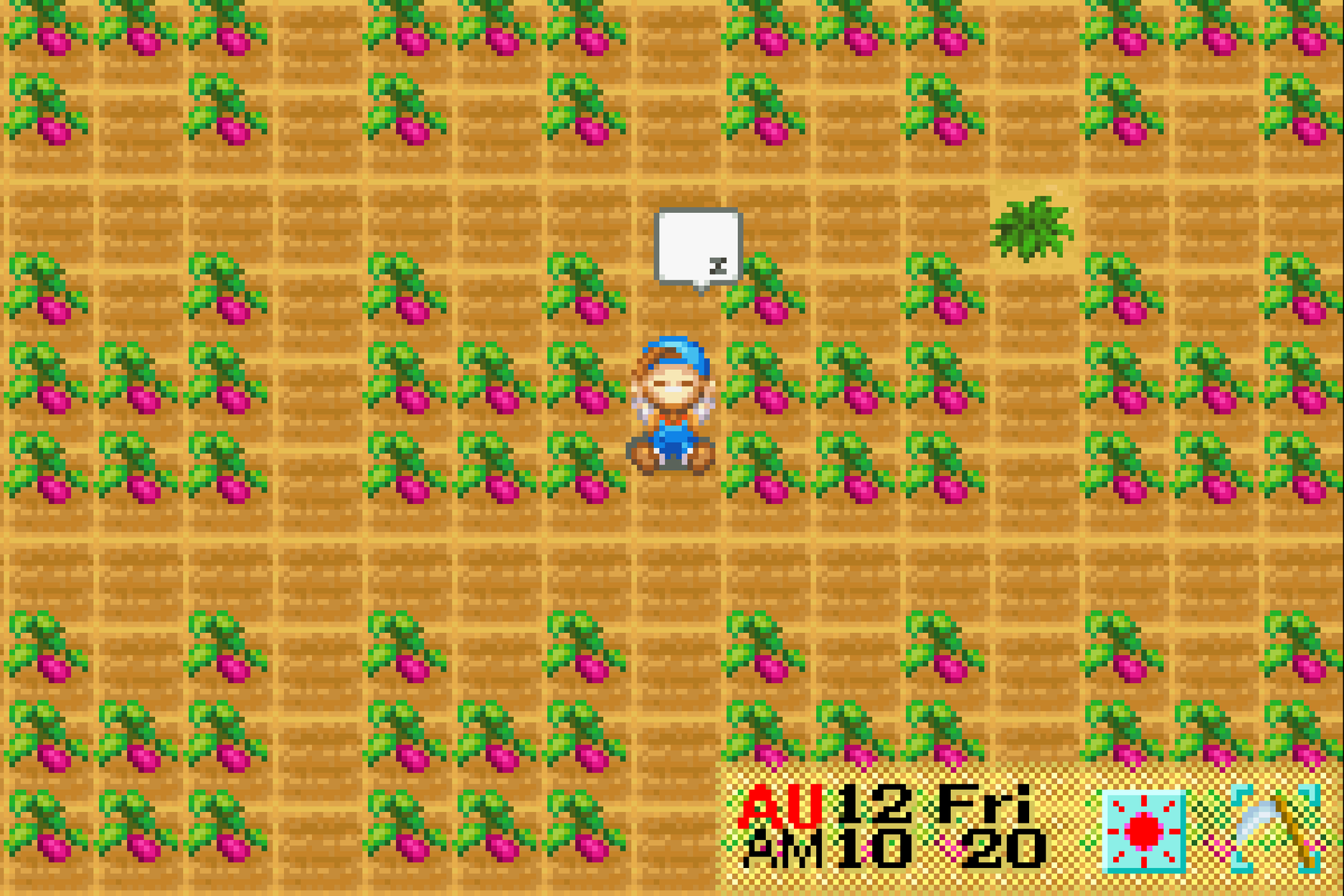
These representations are of course entirely fantasy. They promise a return to a kind of country life that does not exist and never did. Marie Antoinette famously had a French peasant village built to enjoy an idealised pastoral aesthetic separate from the labour and financial hardship. Though I am not saying these digital facsimiles are as egregious, I am just as guilty of relishing a rural idyll aesthetic detached from any real-world implications. To try and translate farm labour into a comforting video game requires an overwhelming use of artistic licence and filing down of the sharp corners of reality. As time has gone on, what little friction these games had has been further whittled away, leaving an unsettling smoothness.
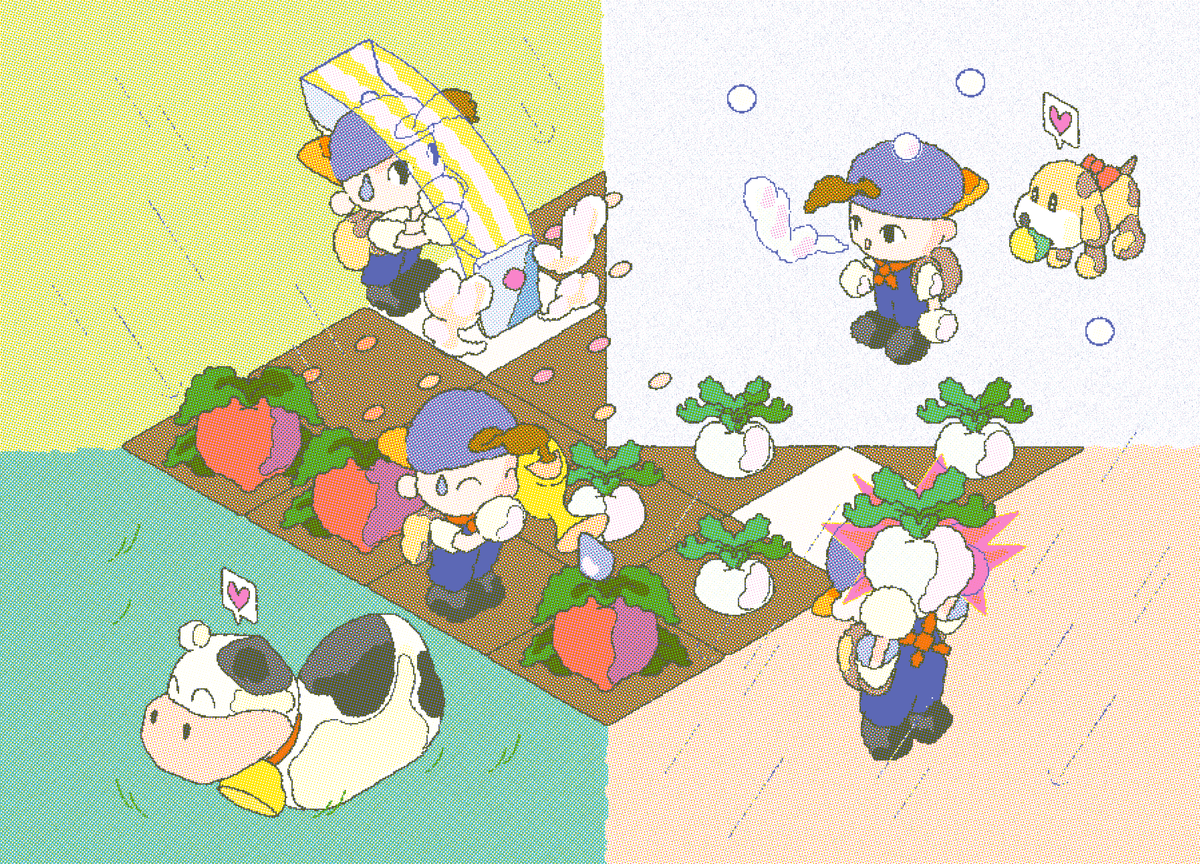
Within these games it is the rhythms that I crave, the seasons rolling into one another as I complete my self-imposed, pleasingly-manageable daily chores. Spring brings new life and vibrant petals. Summer days languidly absorb the heat as fresh green gives way to parched hues. Autumn is the time of harvest, when apples weigh branches down with their abundance. Winter is the time of hibernation and death, a necessary moment of fallow in preparation for the cycle to begin again. It is the purpose of winter and what it represents that is missing from the later Harvest Moon games, and many farming life sim games in general. If these games are about the rhythms of nature and pastoral living – even one that is manicured to make it palatable – then death and winter are an essential part of that cycle.


The death of farm animals is probably the most obvious side of this. In the Friends of Mineral Town remake your animals cannot die, diverging from the original’s oddly Christianised animal funerary practices described at the beginning of this piece. Thematically, it is fitting that animals die. Beyond the setting and motifs it also works on a mechanical level. Ultimately, the purpose of these animals is to sell their byproducts. The longer you have them the more ‘hearts’ (representing your bond with them) you gain, which leads to higher quality byproducts and more money. Before long you find yourself with barns and coops full of animals who adore you, churning out valuable produce. Because they will not do the one thing all living creatures do and die, your resources exist in perpetuity. This ultimately leads to stasis. While death will not change your capitalist relation to these animals, it would at least force you to think about them to some degree.
It is not just the physical death of animals that means these games hit a bizarre stagnation, but the lack of one type of relationship entering its winter in order to make room for a new one. In the original Friends of Mineral Town (but missing in the remake), there were ‘rival romances’. Each romantic prospect had a convenient potential paramour, and these romances developed and would eventually lead to marriages and even to some moving away from the town. If you took too long to make it official with someone: well, too bad. It gave a sense of the characters having agency outside of you. Their lives changing was still reliant on monogamous marriage, but at least it wasn’t solely a marriage to you that could free them from the same schedule and idle chatter.

As well as romantic relationships your general standing with the other characters was dependent on your actions. It meant that the incentives and pressures went beyond merely the financial. Adapting your behaviour due to the scrutiny of a small community, well, that sounds pretty in keeping with the pastoral genre to me. If you littered, hurt your animals, allowed them to die from starvation or sickness, the townspeople would rightfully call you out on your actions and dislike you.
There was also the issue of golden lumber, the ridiculously pricey resource that was the only material in the game that wouldn’t degrade. In the original Friends of Mineral Town if you used golden lumber as building material or for fencing then the townspeople would judge you for being too showy. Rightly so. What sort of farmer fills their field with literal gold? In the remake when I was told about the material I was reassured by the mayor that such judgements were ‘old fashioned’ and don’t occur anymore. That was when I decided to stop playing. It felt symbolic of the friction I craved that was no longer there.


I had barns filled with immortal animals producing the highest quality milk, wool, and eggs; every romance option adored me, all the townspeople thought I was the most wonderful thing to ever happen purely because I existed and occasionally spoke to them. The only thing that ever changed were my crops. Because as each season came and went, they grew and withered with them. The plants got to have their winter, but nothing else did. A lack of death made it feel lifeless. It’s only with hindsight that I see the true value of that bizarre little funeral for my beloved digital chicken.
One sure-fire way to prevent your weeks from feeling stagnant is by signing up for the Archetypes newsletter. Each week you'll get a high-quality article direct to your inbox, along with the occasional studio announcement from Eteo. Now that should keep you on your toes.
You can also head over to the Eteo Discord server to discuss this piece and other articles in a friendly and thoughtful environment. See you there!