Minigames
The Narrative Design Implications of Final Fantasy VII Rebirth’s Many Diversions
To many players, minigames have become synonymous with Japanese roleplaying games. They have evolved from diversions to whole experiences of their own – think of games such as the cabaret club or the business simulator in the Like A Dragon games. Yet for the most part, it’s clear that these minigames are separate from the main experience: meant as nice diversions for the player, but nothing more than that.
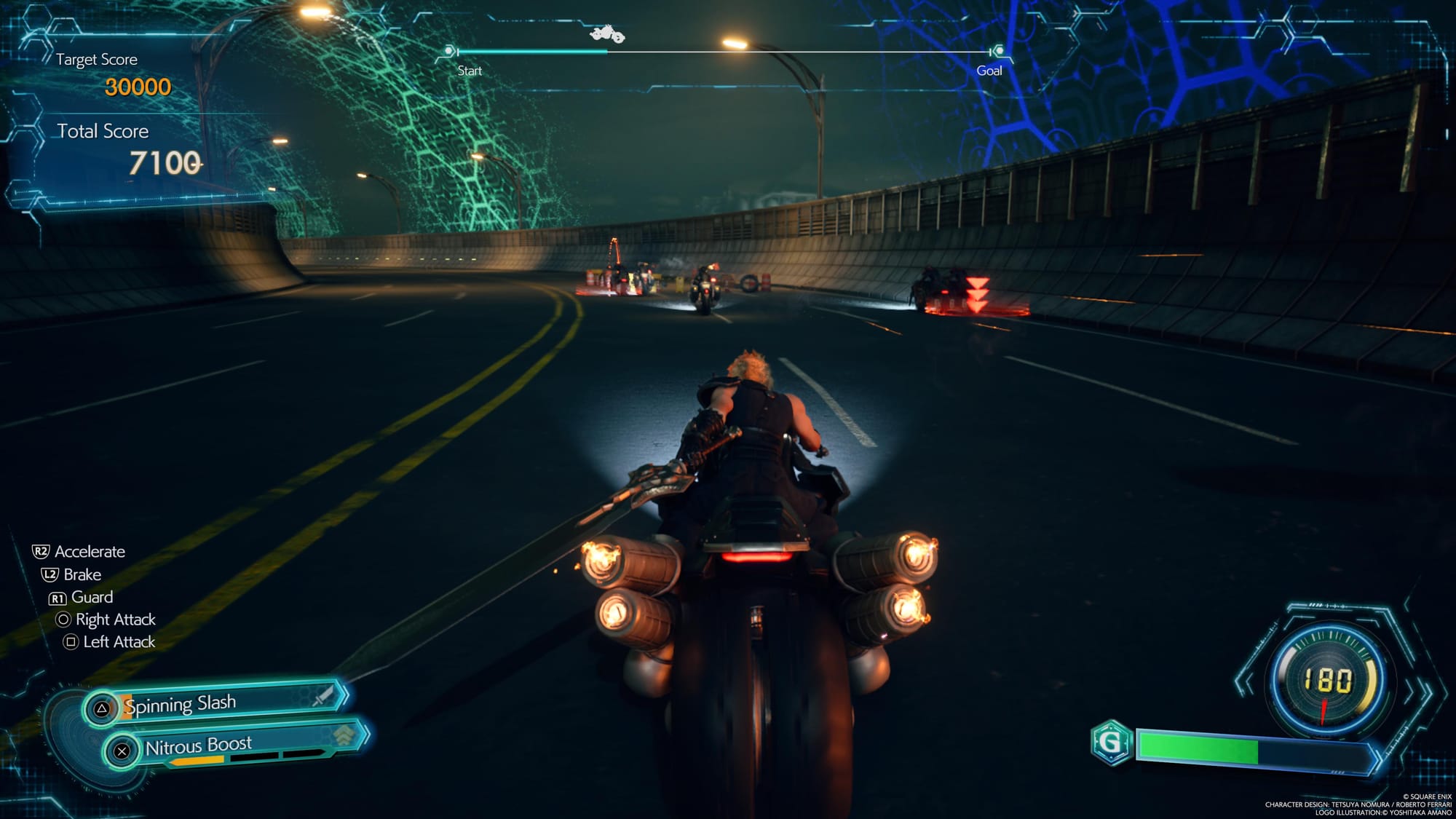
Unlike most of its contemporaries, the original Final Fantasy VII doesn’t just use minigames as diversions. Instead, the minigames let players take part in non-combat activities that progress the story, such as helping Aerith climb the Sector 5 church or escaping Midgar on a motorcycle. In this way, minigames in FFVII act as gameplay diversions that are nevertheless part of its story.
Final Fantasy VII Rebirth leans even further into this concept, by offering a true barrage of side activities that are both part of the plot and, crucially, less of a mindless diversion: they act as a way to interact with more of its world. This is in part possible because Rebirth, unlike the original, makes it clear from the outset that you essentially don’t know where you’re going. Cloud simply follows a group of robed individuals around, hoping to catch Sephiroth through them, going on a long road trip as a result. Things never seem too urgent for a minigame, somehow. It does make the game feel somewhat slow in parts, but the measured pace is the point – Cloud is supposed to immerse himself in the world you're saving.
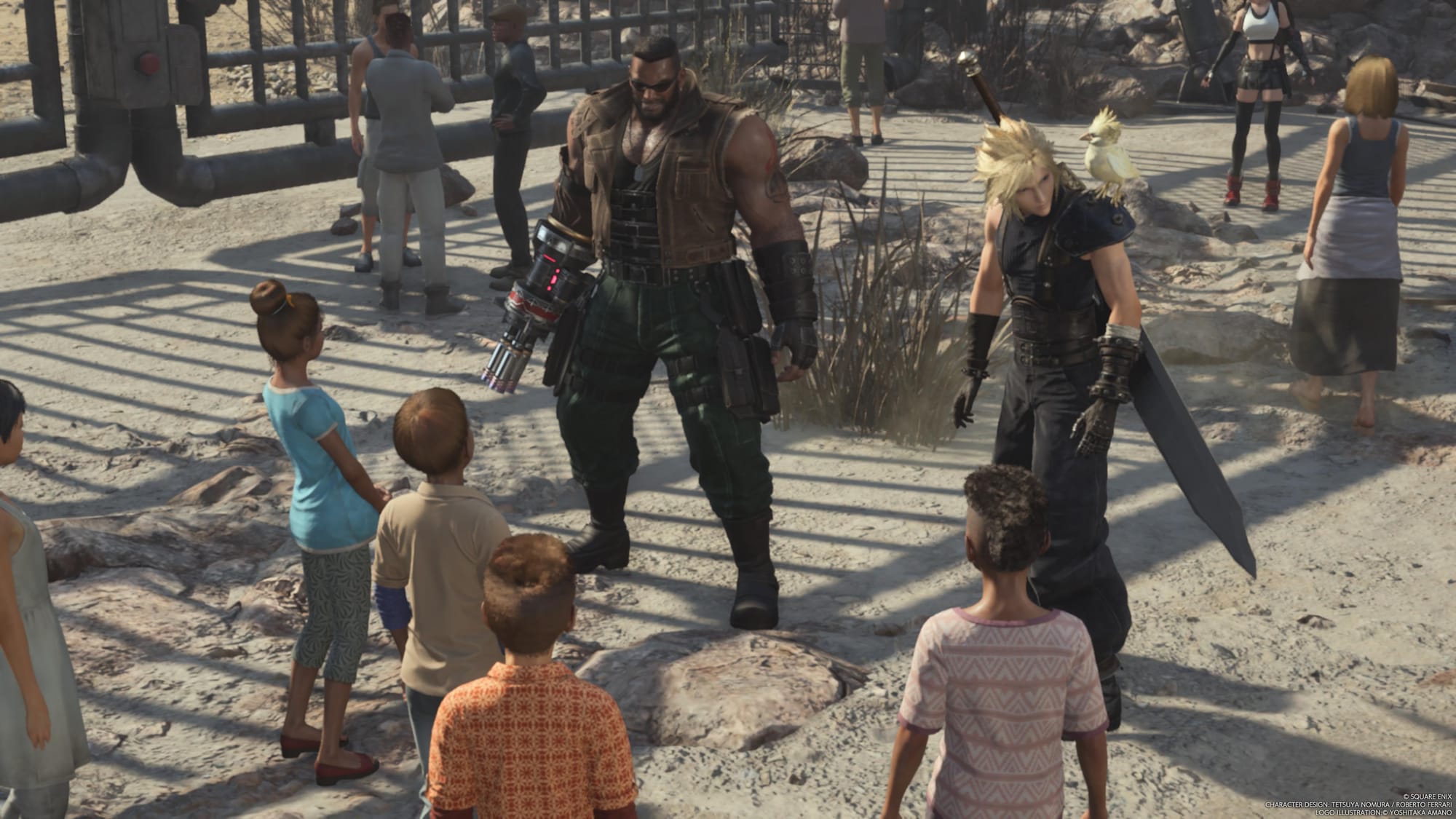
Minigames in Rebirth are not just games, but always part of a side quest. They offer information that, while not essential, helps you to understand the bigger picture and makes the world feel more lived in. For example, after staying with him, you can help Johnny ‒ a character from Remake ‒ with his new hotel venture in Costa del Sol. You catch someone’s escaped chickens in Gongaga in exchange for dinner, or help the gym rats from Midgar at a new location. It’s fascinating that these quests have real, albeit simple reasons for existing as part of the fabric of the in-game world: Cloud needs to eat, sleep and travel, and all of these things cost money. You regularly see people appeal to this taciturn soldier by telling him they’re going to make it worth his while, an amount of narrative effort I only remember The Witcher 3 going to, at least to this degree.
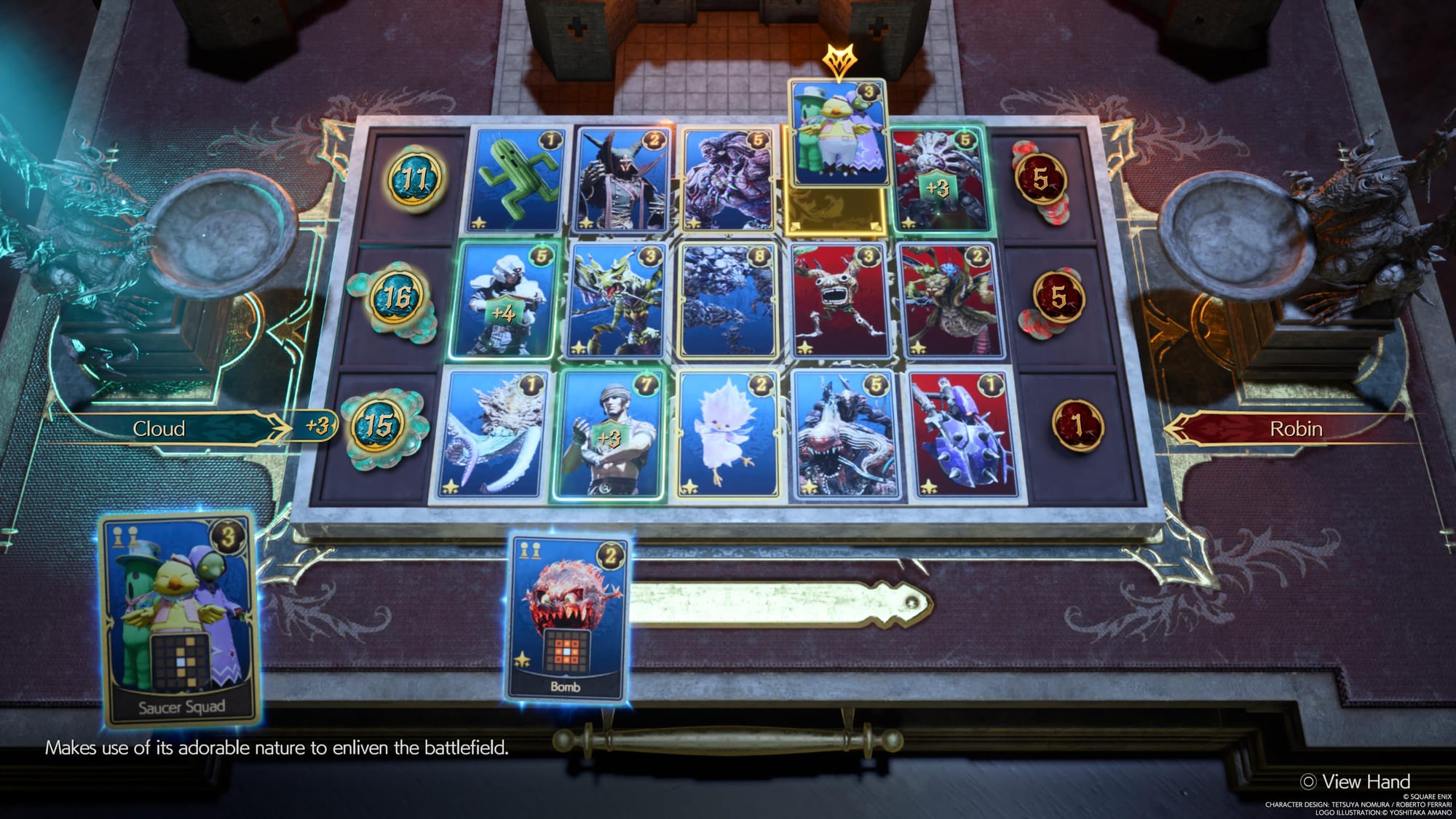
Through the side quest mini games, Rebirth is able to include a large variety of people, a diverse population of different towns and cities that gives Final Fantasy VII the feeling of being set in a modern world. As part of the side quests revolving around playing Rebirth’s card game Queen’s Blood, you meet a man speaking sign language, which Cloud understands because he learned a little as part of his training. This is a facet of his personality we weren’t privy to before. Generally, the more people the party meets, the more we see them react to the outside world. Even when their reactions are expected, it is oddly nice to see characters I’ve grown up with act as part of a larger world or just chat with each other – when the party escorts a dog carrying a large sum of money from a mother to her son in another settlement, Barett lets his emotions get the better of him and wails about how much he misses his daughter Marlene and how she, too, will one day grow up and leave him. I’ve never loved Barett more than I did in that moment, and this is the kind of glimpse that the main game only rarely has time for.
To make room for these quests, the game further establishes that the party is on a long, hard journey, and forces you to rest. From a gameplay perspective, this can be frustrating – as a player, you want to know what happens next in the story, and what happens is that everyone separates to have a jaunt around the local market. I’ve always loved a good hub city, but Rebirth arguably takes the idea of taking a break in each new location to a slow extreme, reintroducing the linearity you’ve just divested yourself of by getting through a dungeon in one piece and exiting into an open world map. You need to enter the hub city and put up with a bit of preamble, such as finding a hotel, before you can unlock most open-world content. These pauses in the action feel natural from a narrative standpoint, but as a player, it can feel like your hand is being forced when you, unlike the characters, aren’t tired and want to keep going. It’s a dedicated nod towards narrative realism where you might prefer the game logic of characters that are able to keep going infinitely, one Rebirth may have taken from games such as Marvel’s Spiderman, where you regularly pass the time by looking after the community and fighting small crimes.
Some minigames in Rebirth recur often enough that they feel like their own games – in each location, you need to catch a chocobo before you can ride them around the open world. Because this is a recurring game, and one you really shouldn’t skip (although you can), Square Enix made the effort to add some variety to the task of sneaking up to the bird: a series of carts on a train track, which you use as cover, will first remain unmoving, then become movable, before you finally need to time the movement of several carts at once. It’s a learning curve you normally associate with games like Super Mario Odyssey, not a role-playing game.
The abundance of minigames seems like a way the development team showcases its love for games as a whole. They are often a great showcase for non-violent game mechanics in a game that’s otherwise all about combat. In one sequence, you need to enlist the help of a dolphin to get onto a platform. There is absolutely no reason to enter a full parkour race, but you can, and this is the whimsy that comes with having the money and time to say ‘why not’. Why not add a dolphin racer, or a chocobo stealth game, or a minigame all about the right way to pluck a mushroom?
The answer ‒ at least if you ask a lot of Rebirth’s players ‒ is bloat, as well as a certain tonal dissonance. The minigames in the original Final Fantasy VII break up an essentially linear game that doesn’t open up until you acquire some sort of vehicle. Rebirth on the other hand is an open world game that offers not only side quests, but also tower activation, combat challenges, a game where you chase moogles around, and much, much more. These incredibly well-crafted elements show love and respect for a multitude of gaming genres, but in this open-world setup, they could be seen as an example of feature creep, resulting in an unfocused experience.
And yet, Rebirth is fascinating for its bloat. It's special for how much space it gives to entirely different stories and ways of playing away from the core experience, from simple open world map cleaning to recurring and evolving games, setting them apart by giving them different levels of narrative importance. It shows how much more real and lived-in a world can feel if you allow for different ways to engage with it. In a genre that was once synonymous with repetitive grind, we now have a game that explores almost every way to play possible.