Skyboxes
The Storytelling Skies of Bloodborne
There’s nothing new under the sun ‒ except in Bloodborne.
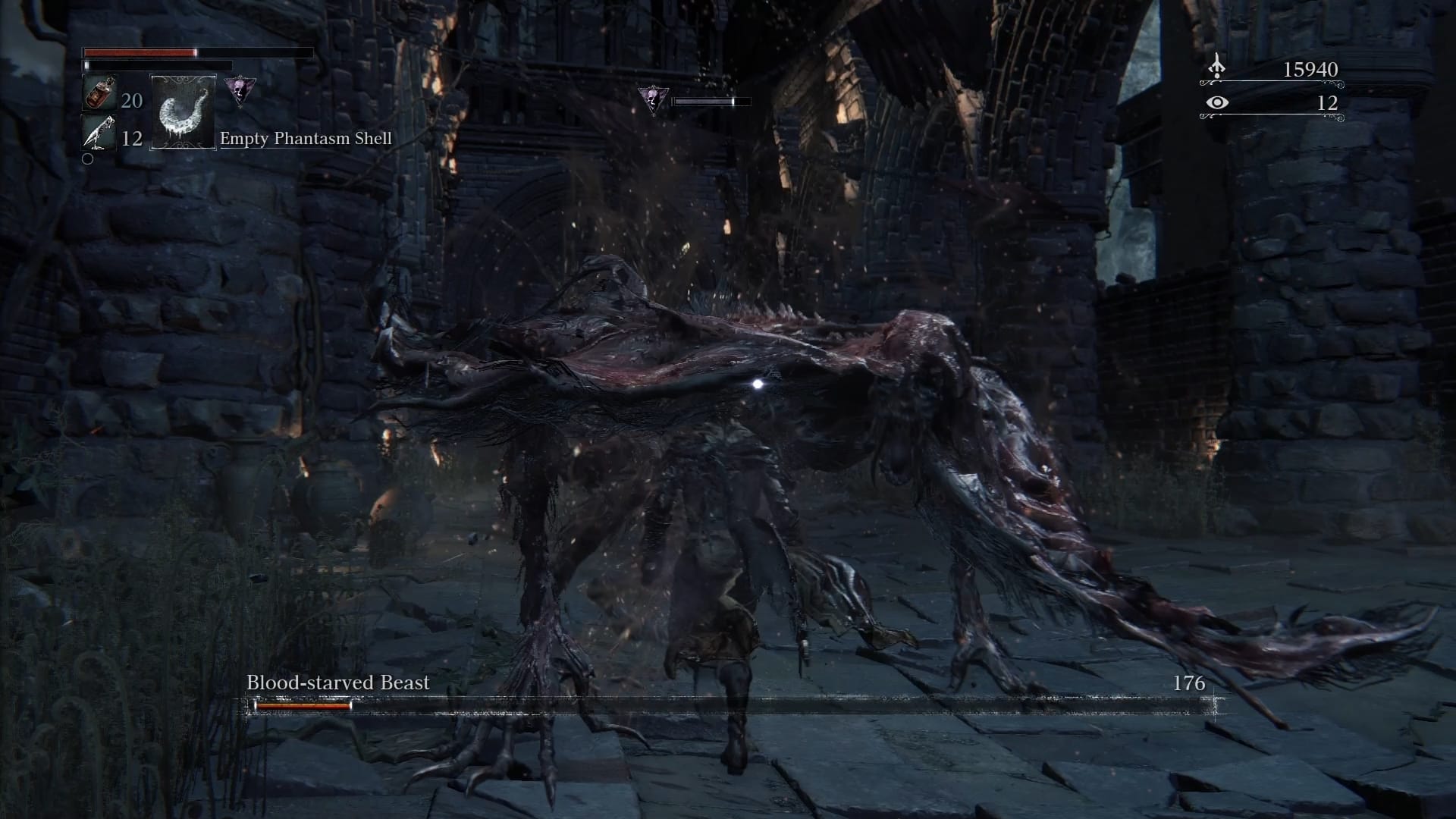
Skyboxes are pretty standard. They’re the set dressing for the character’s stage ‒ and typically, that’s about all. They provide a nice ‘wow’ moment when entering a new area and they’re brilliant to show off in a game trailer but, like many game assets, they’re passive objects. You look at them, and like an old lady doting on her favourite grandchild you go ‘oooh, isn’t that nice’, and then you move on to your other grandchild who is spraying cookie crumbs over your favourite rug (see: Blood-starved Beast).
In Bloodborne, you’ll mostly be focused on the designs of beasts as you dodge, parry and thrust your trick weapon into their mutated flesh. The focus, as you would expect, is on gameplay ‒ and as a bonafide Souls game, naturally the plot is easy to miss. A lot of lore is discovered through snippets of item descriptions and little notes scattered throughout the world, but they’re few and far between. In Bloodborne, however, the skybox becomes a part of the story ‒ a constant marker of how deep into the hunt you are.
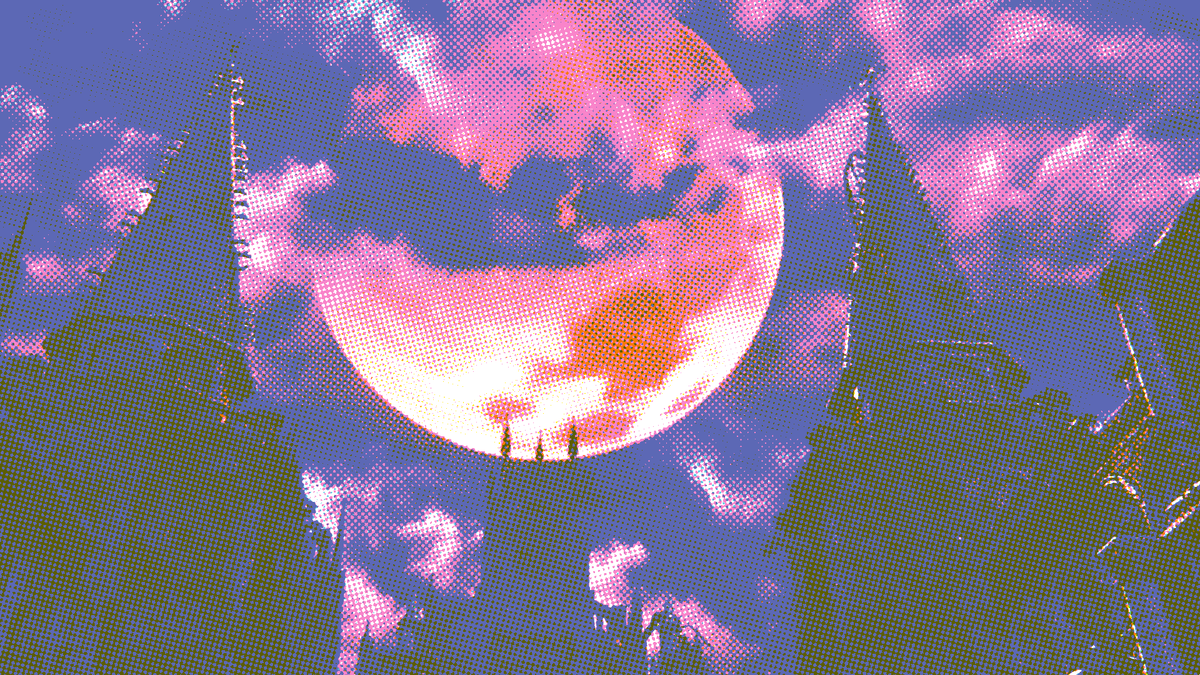
Initially the sky is a mottled bruise of yellows, reds and purples, nestled around the ever-present moon. It’s gorgeously Gothic, immediately creating a sombre atmosphere as your hunter swishes onto the scene. There’s no day or night cycle, no weather cycle to consider ‒ just this one unending night. This is your purpose. You are currently in the dark as to what that purpose means more broadly, but the moon will be your constant companion: in this world and in the Hunter’s Dream. The Dream serves as a refuge, the old seat of the Hunters, and centers around their workshop where you can upgrade or modify your weapons. The sky here is completely dominated by the moon. It is unflinching, unchanging: a large gentle eye watching over the last of the Hunters protecting Yharnam, perfectly preserved in time.
Outside in Yharnam, however - where the bloody work of beast hunting takes place ‒ the sky shifts and darkens as you progress the plot. The more blood you spill, the deeper into the night you get; the more beasts you kill, the more you forget about the background details of Yharnam. You’re focused on the thrill of the chase ‒ stealing back your health from the beasts’ jaws, honing your timing until it’s scalpel sharp. Under a soft, almost-golden twilight you enter the cathedral and take down the last remnants of Vicar Amelia and step out into… unexpected darkness.
The night is alive; you are a part of it. Your actions change the world. There’s no real way to save it but, the promise is there. The moon still hangs above you ‒ a constant presence ‒ but the deeper you go the more that feels like a threat. The sky instils a sense of dread as you wonder what will cause the next shift, the next change. How dark can the night get? Stepping out into the gloaming immediately grabbed my attention as, of course, I had forgotten about the sky. Or rather, it had become a soothing background hum. This change is felt immediately as certain enemies become dormant, soothed by the moon’s light, whilst others are suddenly up and out for blood. I, for one, completed Hemwick Charnel Lane before sundown on my first run-through, and then went back later and had a very nasty surprise at the new shrieking inhabitants – their one defining feature being their lamplike, lunar eyes. It was one of those moments that stuck with me because I wandered over, feeling in control, knowing exactly what to expect. But I was wrong. And I loved being wrong.

The moon was my cue, but I didn’t understand what it meant yet. You have an insight meter throughout the game and the more you see, the more you know, the more you truly see and uncover throughout Yharnam. Without giving too much away: it turns out ignorance truly is bliss. The darkness acts as a blanket to hide under rather than the real source of fear, and even that feeds into Bloodborne’s overarching themes of hubristic overreaching, a deepening thirst for knowledge, and being confronted with the visceral reality of thrusting headfirst into things never meant to be comprehended by man. You begin the game in twilight, poised between day and night, layman and Hunter, but you are figuratively in the dark. All you have is a note you left for yourself before being infused with unknown blood: seek Paleblood to transcend the hunt.
There is, of course, the third state. The game changer. The Blood Moon. After beating a pivotal boss, everything changes once again with the moon reflecting an uncanny red light, marring the sky an even deeper purple. It’s truly beautiful ‒ hypnotic even. As I revisited an area I’d stumbled into too early, I sat and looked up at this new moon in awe ‒ finally understanding that initial note, as I found another proclaiming: “Behold! A Paleblood sky!” This was what ‘I’ had wanted… why? Now that the moon had changed and the creatures around me had grown even more bestial ‒ the people locked indoors now only able to gurgle and howl ‒ I knew that I couldn’t predict anything else going forward. Only by beginning to hold enough pieces of the puzzle to form an outline did I understand how truly small the handful I had was. Though the cosmos is filled with forbidden knowledge, there it is above you. Is it revealing itself to you or luring you further down, a great Eldritch anglerfish? Does it matter anymore?


Yet what truly horrified me in Bloodborne wasn’t actually the moon… it was the absence of it. In the DLC a warped, filmy sun glares down at every action you take. Every cut, every kill, every blood-drenched step you take forward to the truth behind the Hunters’ origins is laid bare for all to see. The overarching theme of the DLC is secrets and their awful exposure to the light of day. You may have been accustomed to the comfort of night shrouding all your darkest deeds, but I for one felt strangely vulnerable despite being the one kitted up for slaughter. I was following the buried thread through the river of blood, but the sky was relentless, its great eye silently witnessing every action I took. I hated and adored it. It was such a stark contrast to the rest of the game that the feeling of travelling to that new area is seared into my brain: all because of a skybox.

The subtle power of atmospheric lighting and skyboxes is something that can often fade into the background, but they are always there, colouring your impressions. Bloodborne uses its skybox as both set-dressing and a tool to shape its narrative, reinforcing the game's themes around the fear of the unknown and unseen. Symbols of eyes, the cosmos and the hunt itself all combine with the omnipresent moon, the keystone that our story revolves around. You, the player, see it change and wonder if and when it will again – which of your actions will it respond to? How dark can the night become before you’re granted the reprieve of dawn? And when you see what the darkness was hiding, well, you might regret your wild curiosity.
For more thrilling articles on game design, you can sign up for the free Eteo Archetypes newsletter. You'll receive a weekly article direct to your inbox, plus any important studio announcements from Eteo.
You can also join the Eteo Discord server to discuss this piece and other Archetypes articles in a friendly and thoughtful environment.