Minigames
Skeuomorphs and the Uncanny in Her Story’s Mirror Game
Some minigames don’t announce their presence. They’re not centre stage, they don’t help you advance in the main game. Yet, the developers spent time and effort creating them ‒ for a reason. The best example I’ve come across of this kind of deceptively unassuming minigame is in the crime fiction title, Her Story.
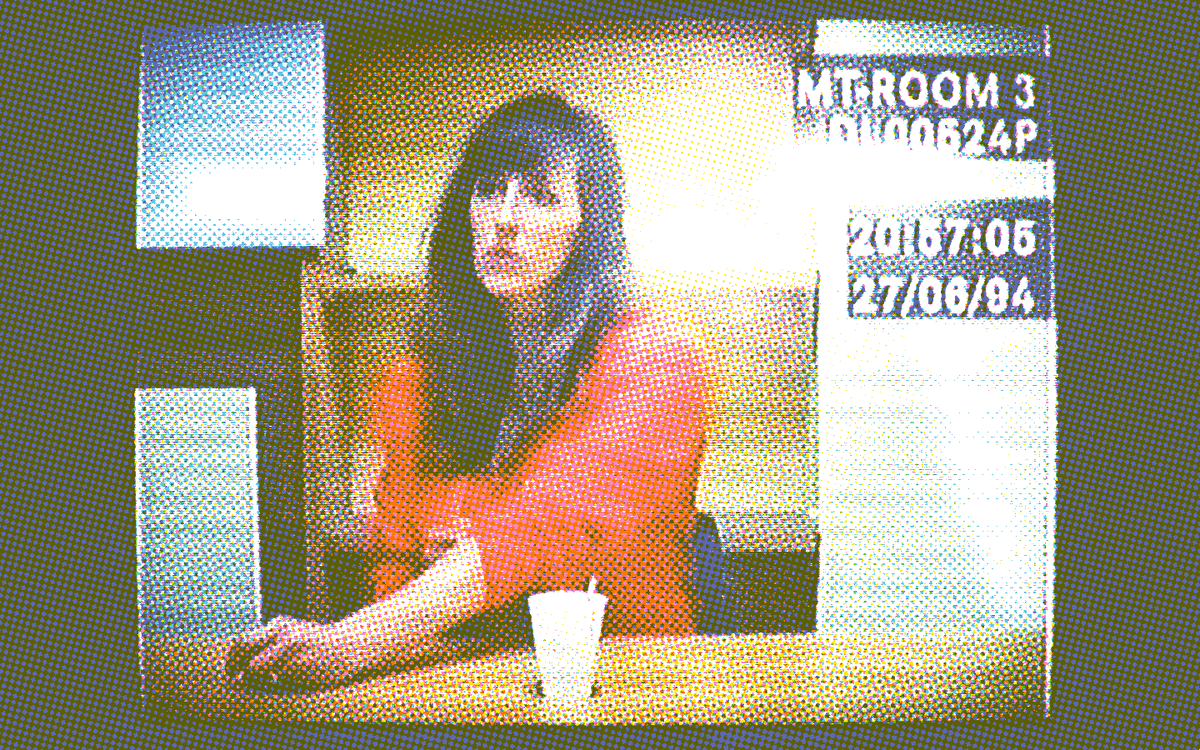
Her Story was originally released in 2015, written and directed by Sam Barlow. Gameplay involves you searching through a database of video clips from a police investigation into a missing man. The main game mechanic is simple: search through transcribed interviews with his wife using keywords. That’s it. It’s a delightfully elegant puzzle, and its critical acclaim would lead Barlow to create other full motion video mysteries Telling Lies and Immortality.
Her Story is also a skeuomorph. Skeuomorphism traditionally refers to the practice of imitating the design of an object made in a different material to evoke its function or associations, such as the save icon resembling a floppy disc. In the case of Her Story, the humble computer desktop is imitated, complete with the half-reflection of the dingy office “you” are working in.
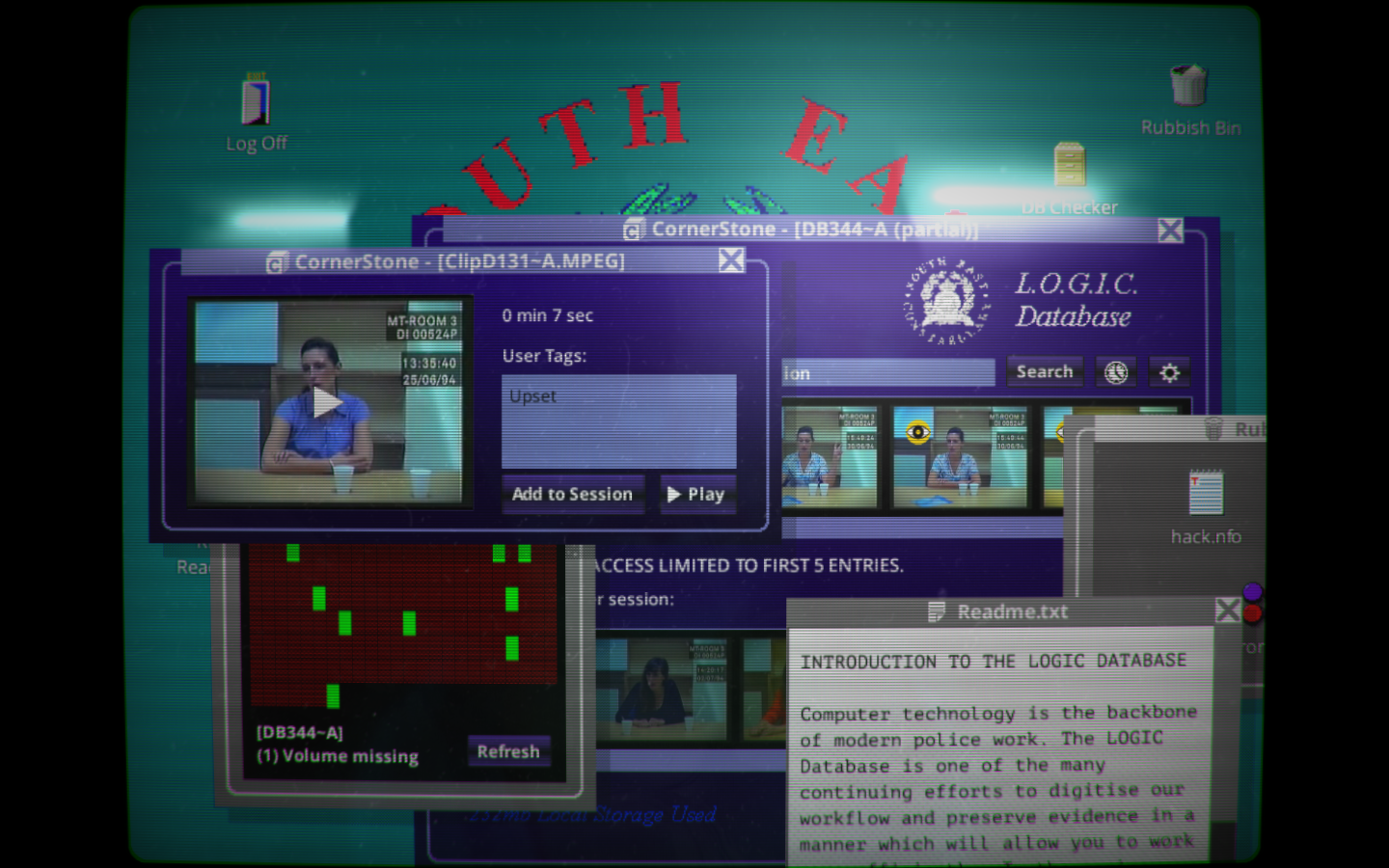
As any detective or archaeologist worth their salt will tell you, you always find interesting clues in the stuff that people throw away, and the rubbish bin on the desktop computer in Her Story is no exception. Inside is another skeuomorph, a digital version of the board game Reversi, here renamed as the ‘Mirror Game,’ and it's Her Story’s hidden minigame.
The history of Reversi, the analogue board game, is as chequered as its gameplay. It's a strategy game for two players originally invented in the late 19th century, though attribution of this is unclear. To further confuse matters, a modern version of the game was patented with the name Othello in 1971 by Goro Hasegawa. He apparently developed the original prototype in 1949 using stones from the game Go and milk bottle tops. Funnily enough, Othello was actually the first game both published and developed by Nintendo as a digital arcade.
Her Story’s Mirror Game seems like a far cry from those origins, housed as it is on a facsimile of a sterile computer desktop. However, its context indicates that it was downloaded by the previous user, especially as there’s an associated text file in the rubbish bin suggesting they pirated it. An illicit copy. Whoever it was left traces of themself all over the computer, like digital smeared fingerprints. After all, you start off with their previous database search for “MURDER.”
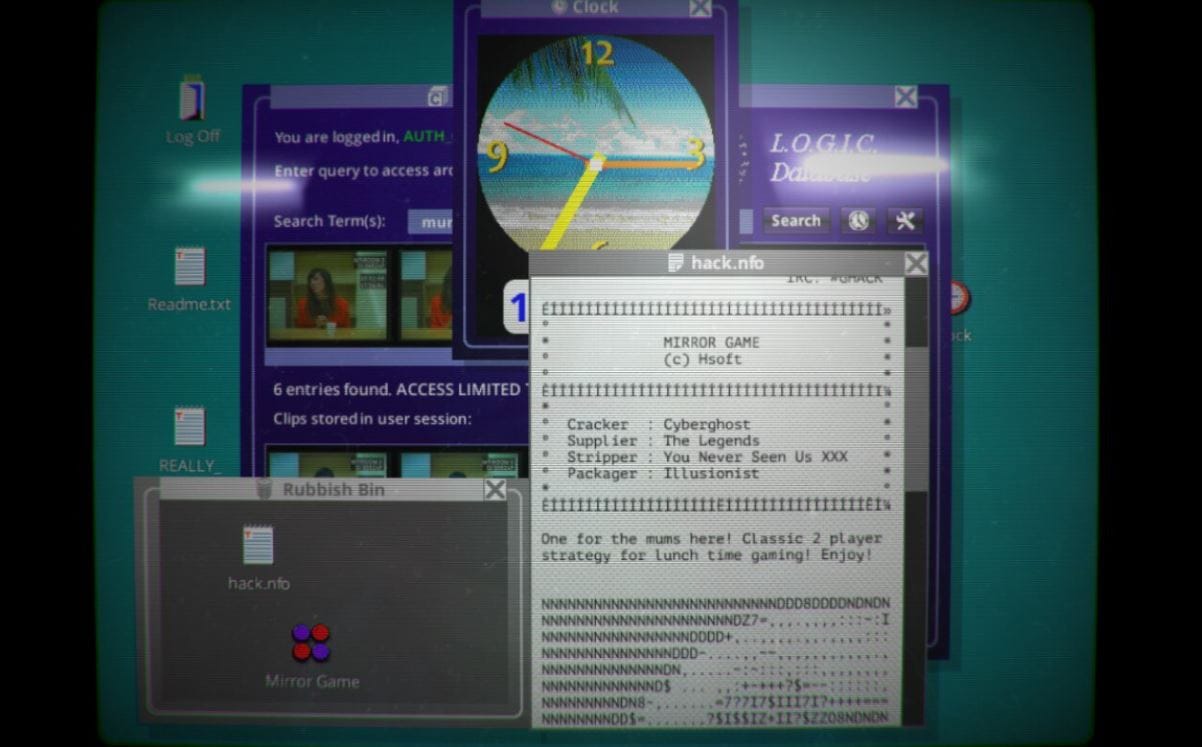
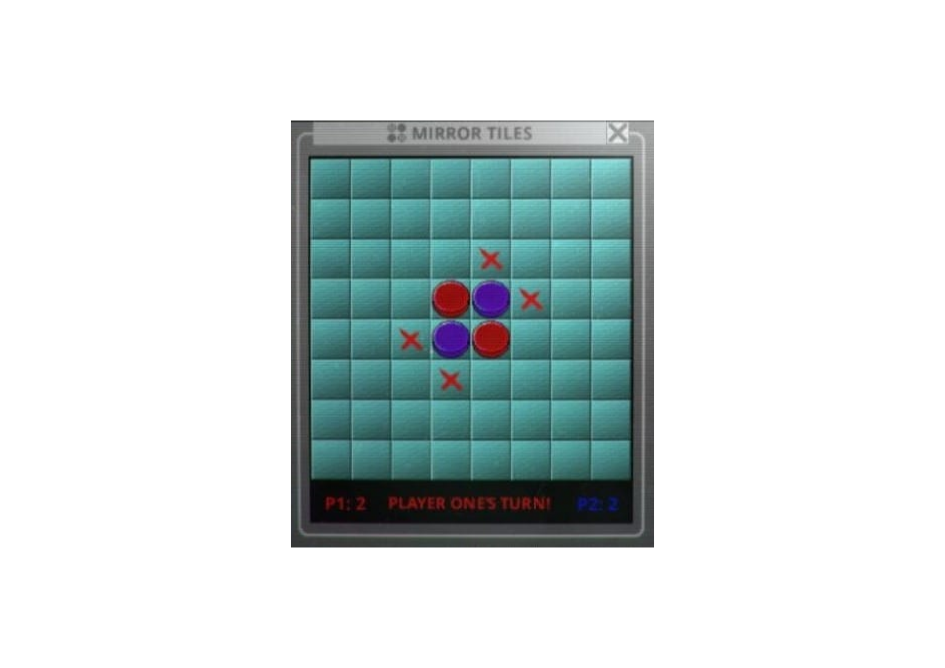
After excavating the Mirror Game from the rubbish bin, the punchline is of course that it’s a game for two people, hidden in an ostensibly single-player mystery title. An odd choice at first glance, but when you consider that Her Story is really about playing against your own preconceptions in order to find evidence, it thematically makes sense. The game itself operates on a 8x8 board in which Player 1 (Red) and Player 2 (Blue) take turns placing discs. The ultimate goal is to have the most discs on the board once it's full. An opponent’s discs will turn to your colour if they are on the same line as a newly placed disc, and another in your colour.
The ‘mirroring’ nature of the minigame, in which discs are captured along an axis and replaced, also echoes the recurring motif of mirrors and doubling in the overarching narrative of Her Story. Not to reveal too much about the plot, but it turns out that missing man Simon was a glassmaker, and he gifted a mirror to his wife on the night he disappeared. His wife’s name Hannah is even a palindrome, something that she happily remarks on in one of the clips ‒ “It doesn’t work if you mirror it though, not quite symmetrical.” This theme of imperfect mirroring repeats again and again, and the minigame adds to this resonance.
The doppelganger is a classic Gothic trope, made famous by Robert Louis Stevenson’s Strange Case of Dr Jekyll and Mr Hyde. The use of this trope is often associated with the uncanny, which is another literary device often referring to the process of the familiar being rendered unfamiliar. What could be more uncanny than your own reflection taking on a life of its own? If we consider skeuomorphs as doppelgangers, then Her Story is very uncanny indeed.
Having the game accessed through a mundane database interface is ingenious on several levels. From a design perspective, the skeuomorphic form of the game makes interacting with it intuitive. We all know how to type in a search term, and we’ve all gotten bored while working and sneaked in a game of Microsoft Solitaire. Yet, we also know that this is a digital double ‒ it’s strangely familiar, yes, but still strange. Consider that Sam Barlow described the interface as “part Apple II, part Windows 3.1 and part Windows 98.” It’s a Frankenstein's monster of operating systems.
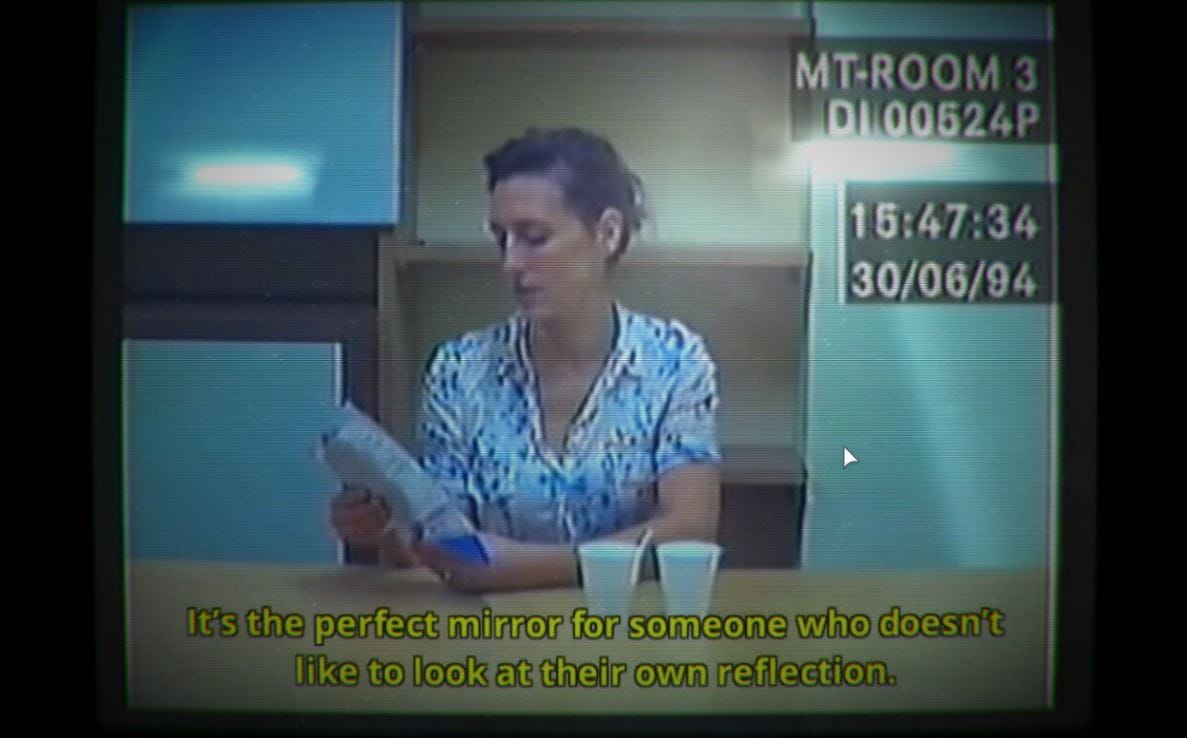
In a README file on the desktop, there’s more context for the footage you’re trawling through. Apparently the recordings were transferred from the original tapes made in the ‘90s, and the detective’s footage was likely damaged when the old archives were flooded in 1997. Even the interviews are a digital double of their original. The Mirror Game, too, is a doppelganger of a much older analogue game. The creator of precursor Othello claims its origins go back 5,000 years. Whether that’s true or not, the Mirror Game is a copy of a copy, haunted by memories of bottle tops in the 1940s and misspent afternoons playing proprietary games on a family computer in the late 90s.
Her Story has 13 Steam achievements. The most elusive one, that only 13% of players have achieved, is called ‘Score Draw.’ It requires you to reach a draw in the Mirror Game, to come to a peaceful ending with yourself (or some other party, if they are present). “Not all games have winners or losers,” says the achievement, but they all have shadows in the mirror. Or minigames whispering from the desktop browser.
If you enjoyed this dive into weird and wonderful game design practices and want to see more, sign up for the free Eteo Archetypes newsletter. You'll get the weekly Archetypes article in your inbox, plus important studio announcements from Eteo.
Join the Eteo Discord server if you want to discuss this piece and other Archetypes articles in a friendly and thoughtful environment.