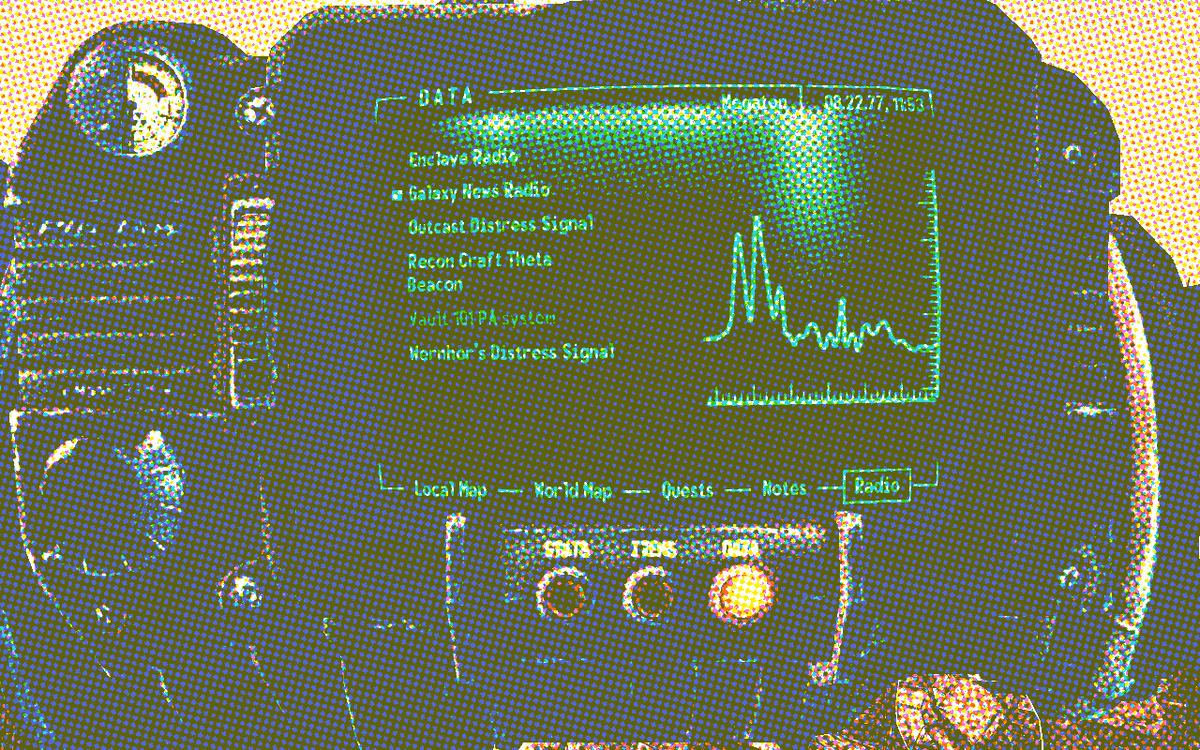
Radios
Nostalgia Power - the Origin and Evolution of Fallout's Pip-Boy Radios
Can you think of a place and time that you associate with a specific song, or album? For me, it’s driving through the streets of Bristol while singing the Gorillaz song Superfast Jellyfish with my sister. (To which, yes, we can repeat every word with all the vocal inflections, thank you.) It’s a strange old thing, as there was nothing particularly remarkable about that day - it was simply a drive back from town. Yet it’s a moment that remains anchored in my mind, bringing back feelings of a carefree summer. It’s an example of the incredible mnemonic power of music, which studies have shown is linked to our implicit memory. In other words: the unconscious absorption of information through our senses, rather than through conscious thought. It’s a process that uses numerous parts of the brain, and elicits strong emotional reactions. This is why neuroscientists have looked to music as a way to help dementia patients, as when our conscious memory becomes damaged, music can bring back vivid memories absorbed through different pathways.
This effect applies, similarly, to memories made within the digital world. I still strongly recall a battle with a deathclaw in Fallout 4, during which my Pip-Boy fortuitously started playing Wagner’s Ride of the Valkyries. It was the perfect accompaniment to my tussle of chainsaws and claws, with the elevated classical music providing ironic juxtaposition to the violence of the situation. Speak to any Fallout fan, in fact, and they’ll recount similar memories tied to specific radio stations or songs from the games. Since Bethesda took control of the Fallout license, the Pip-Boy radio - a mobile radio device that players can switch on manually - has become a core element of the series’ identity, and a beloved source of nostalgia for players. “I feel like it becomes a snapshot of time in your life,” says Mark Lampert, audio director on Fallout 3, Fallout 4, Fallout Shelter and Fallout 76. “So when you hear it now, it instantly takes you back.”
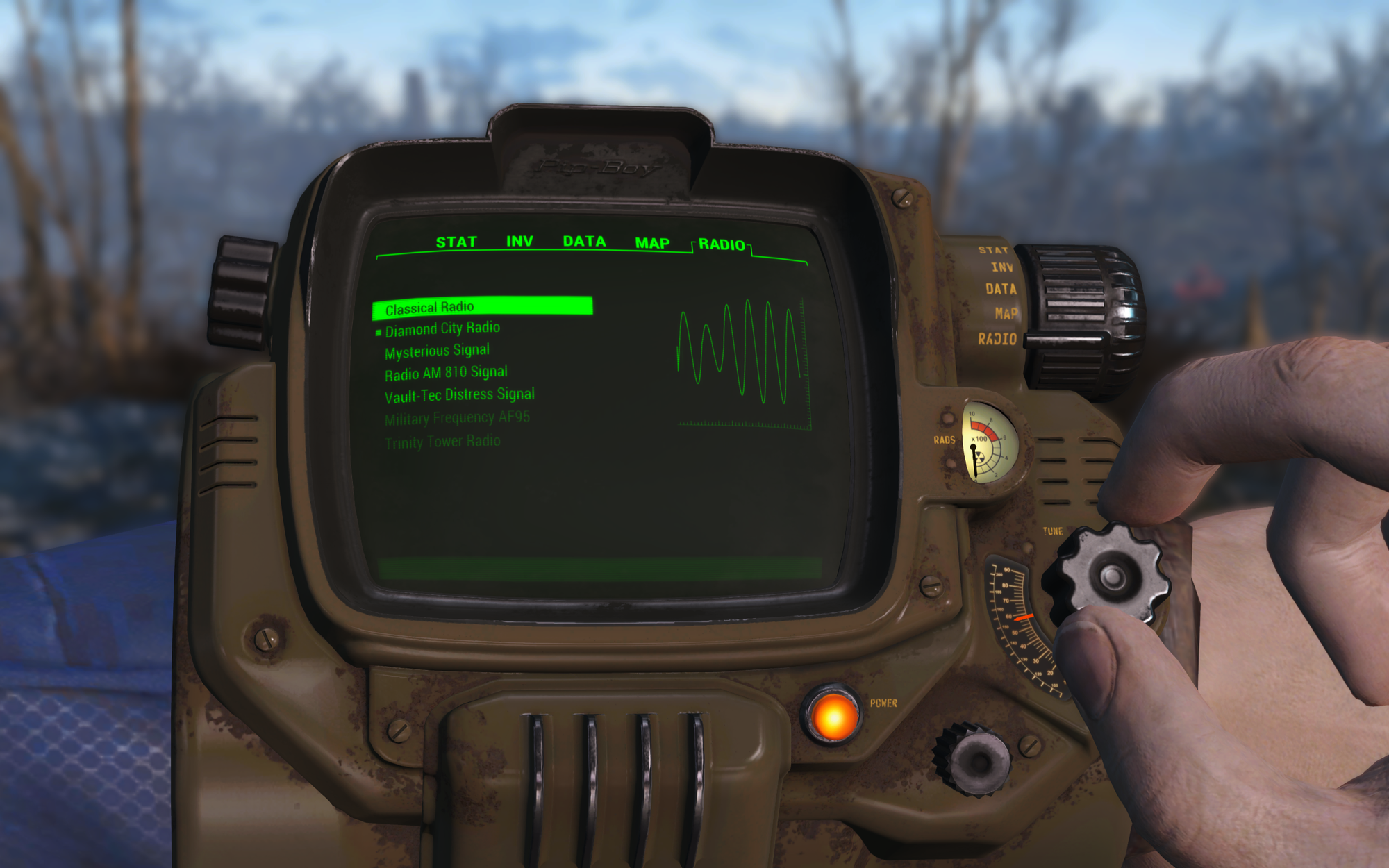
The Fallout series didn’t always have jaunty, 1950s-flavoured radio stations that you could tune into on a whim. The first two games - developed by Interplay/Black Isle Studios with music by Mark Morgan - both used unsettlingly bleak, ambient soundtracks that kept the player on edge. Want to feel unnerved? Just take a listen to the blaring alarms and discordant drones used for Fallout’s ghoul city of the Necropolis. The introduction of Pip-Boy radio stations by Bethesda in Fallout 3 marked a significant shift in the musical makeup of the Fallout games, introducing a more tongue-in-cheek feel to the soundscape. Yet the idea for radios didn’t spring from nowhere: as Lampert tells me, the Pip-Boy radios were inspired by the trailer music from the first two games. Namely, the songs of 1930s vocal group The Ink Spots.