Flying Cities
Preview: Achieving the Addled Intricacy of Gravity Rush 2
Is there a more dangerous temptation for a designer than intricacy? Intricacy dazzles. It feels both thrillingly frothy and hard-earned. Intricacy delivers the panoramic drama of a landscape in all its complexity, its over-building, its runaway ideas and its addled mis-steps. Intricacy is where you can see the lore right up there on the screen. In games it can give players a world so rich with possibility that they could never hope to truly own it all or explore it all.
But intricacy is a trade, which means you lose something crucial, too. More than anything, you lose the specific power behind a memorable image offered by the architect Louis Khan, who said that the sun "never knew how wonderful it was until it fell on the wall of a building."
To read that line is to exhale. Space! Relief! And in your mind's eye you see a vision of simplicity - the flat plane of a wall and the rich bloom of the sun. Surface and light. It's the world reduced to its most pleasing fundamentals. It's the world with everything else scraped away.
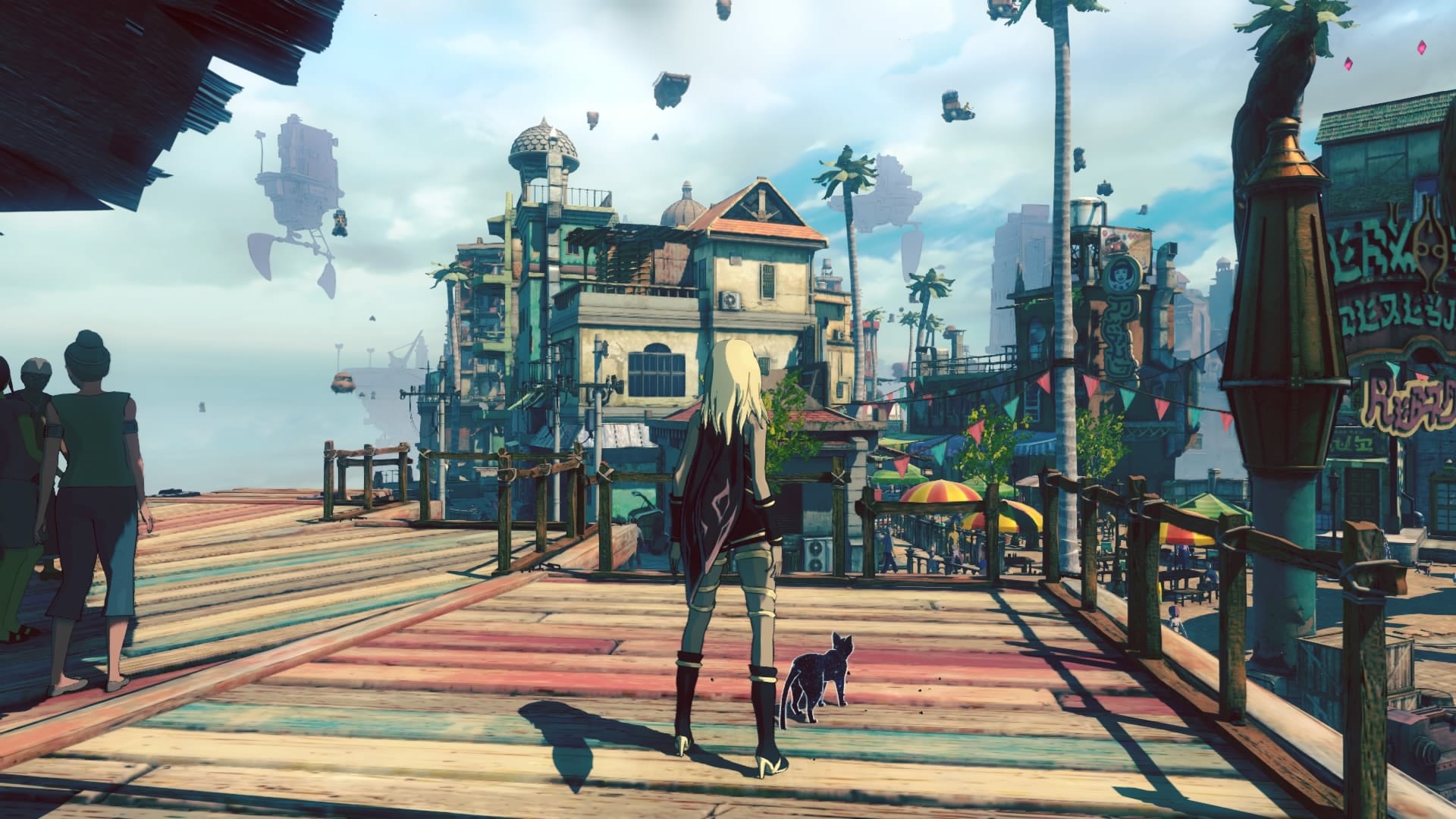
This is what intricacy is up against, and it also explains why a beautiful game like Gravity Rush 2 rarely results in beautiful in-game photographs. Perch yourself on a pleasing spot. Pull out the camera. The shutter closes and - all of a sudden there's just too much of everything. Where does the eye fall? What's the focus? What's the point of all this antic busyness? Where are the shapes?
...And that's all for this preview! If you want to see more, sign up for the Eteo Archetypes newsletter to have the full article sent straight to your inbox.
You can also join the Eteo Discord server to chat about Archetypes pieces as they are published, and be the first to hear about playtesting opportunities for the next Eteo title.